




Origins and Development
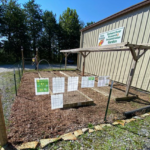
The Feed Fannin/Barbara Ferer Research & Development Garden began in August 2018 at the former site of the Fannin County Family Connection Food Pantry in Blue Ridge. The garden was made possible by a grant from The Georgie Link Jr. Charitable Trust. The inaugural project adopted the “Mittleider method,” aiming to achieve higher yields with less water and in smaller spaces compared to traditional gardening approaches.
Relocation and Evolution of Gardening Methods
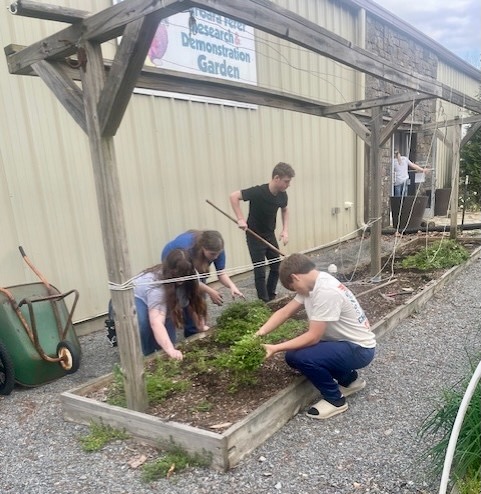
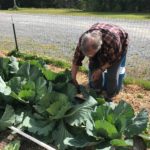
In 2020, when Fannin County Family Connection moved to its current location on Industrial Park Drive in Blue Ridge, Feed Fannin volunteers relocated the Mittleider Garden as well. The cultivation of vegetables using the Mittleider method continued until 2023. At that point, the original sand and sawdust method transitioned to an organic approach. This new method incorporated several raised beds, utilizing soil and amendments, and research continued with various plantings, soil amendments and techniques.
Bringing the Garden Home: The 2026 Move
In early 2026, Family Connection announced plans to expand their facility, which necessitated repurposing the research garden area utilized since 2020 to accommodate their new development. In response, detailed plans and a proposal for relocating the Research and Demonstration Garden to Feed Fannin’s Ada Street farm — where the organization’s other interests are based — were developed and submitted to the Feed Fannin Board of Directors by Kathy Beck, vice chair of Farm, Facilities, and Agricultural Education. These plans received unanimous approval from the board. Since 2014, the Fannin County School Board has generously leased the Ada Street property to Feed Fannin.
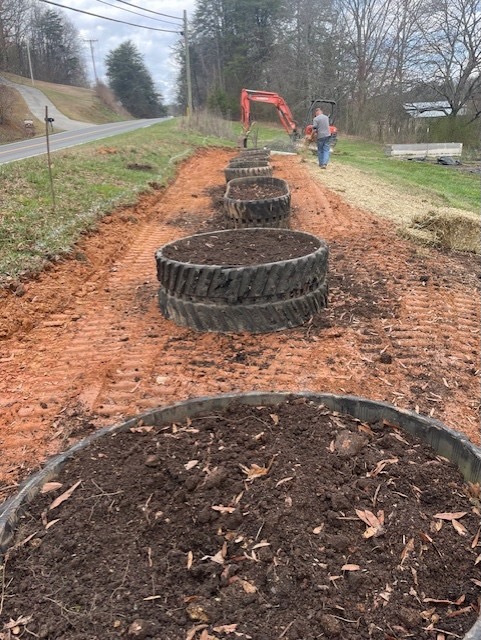
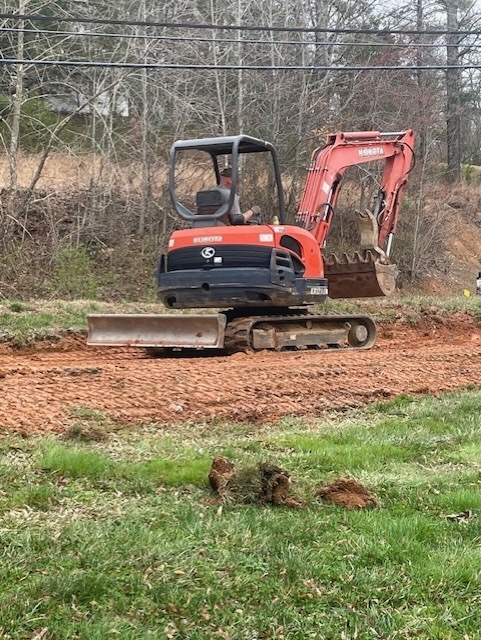
Special thanks are extended to Feed Fannin friend and Young Farmer Association’s President, Kenny Queen, who donated his grading services and helped secure skid tracks to use as raised beds for the property. Many of the materials from the past research garden such as soil, gravel, boards, fencing, and signage from the previous location were salvaged and integrated into the new garden design or saved for other uses on the farm. Volunteers from Feed Fannin, along with students from Fannin County Middle and High schools, contributed their efforts during Community Service Day to help with moving materials.
Future Research and Gardening Approaches.
Looking ahead, research will focus on planting heirloom seeds and plant varieties from local farmers and testing varieties not previously grown in the garden. The garden will utilize bush varieties and climbers planted in growing bags, placed to use fencing for space-saving and improved airflow. Disease-resistant varieties and companion planting techniques, such as placing herbs near tomatoes and marigolds near beans, will be prioritized. No chemical additives will be used.
A pollinator garden featuring flowers like zinnia, cleome, cosmos, yarrow and herbs such as basil and dill are being established to attract beneficial insects. Organic sprays made from garlic and neem oil will be used for pest control. Crop rotation will be practiced throughout the garden, with meticulous records kept on planting dates, issues encountered, and the quantity of produce harvested and donated.
Feed Fannin will uphold its tradition of hosting FFA students and other groups for hands-on work and educational demonstrations. Collaboration with the Master Gardeners and Young Farmers Groups will continue, supporting initiatives that align with the Feed Fannin mission and encouraging community education.
Excitement and Continuity
An Open Garden event is being planned for mid-summer, once the garden has been established. Invitations will be extended to various community groups and media to celebrate and participate in the ongoing success of the garden. Stay tuned for more information to come about the event.
There is a sense of excitement as the new garden takes shape. The installation of fencing and a beehive aims to attract bees and butterflies and enhance the area’s beauty. All elements of the new garden design and diverse plantings are coming together, ensuring that the legacy of the Barbara Ferer Research and Development Garden will endure.
By Kathy Beck, Vice Chair for Farm, Facilities, & Ag Education